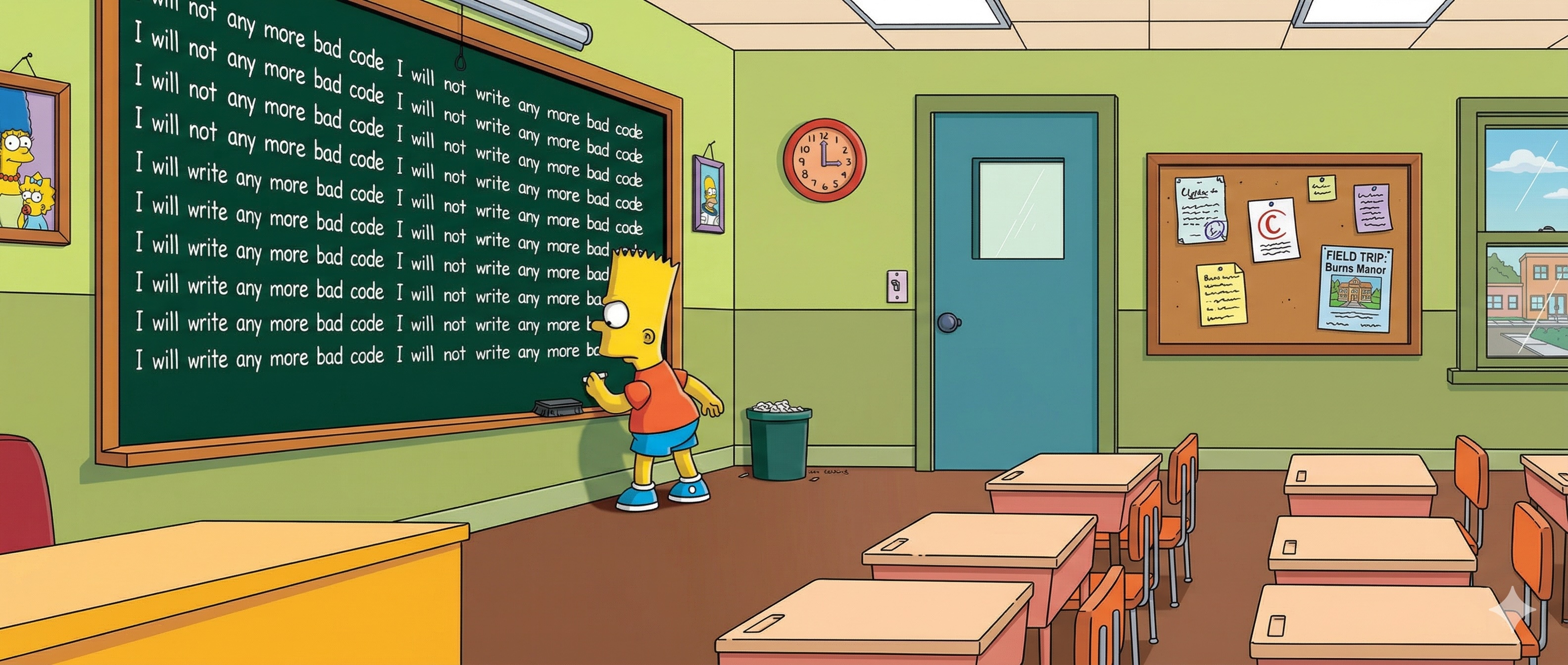
We’ve all had that moment recently. You describe a complex, multi-step data transformation in plain English, hit enter, and watch an AI agent beautifully spit out fifty lines of perfect, linted code in just a few seconds.
For many, that sight is terrifying. It looks like the end of a once promising and lucrative career path. But if you look closer at the history of computer science, you'll realize we aren't witnessing a funeral. We're witnessing a promotion.
The Abstraction Ladder: Solving Bigger Problems
The history of software engineering is really just a history of moving further away from the machine. We didn't "lose" jobs when we stopped punching holes in cards; we just started solving bigger problems.
The Logic Gate Problem: 1950s - 1970s
The problem was: "How do I make this hardware execute a single math operation?" The "coder" was a manual translator between math and electricity.
The Memory Problem: 1980s - 2000s
The problem was: "How do I fit this program into 640KB of RAM?" Engineers became resource managers, fighting for every byte.
The Scaling Problem: 2010s - 2024
The problem was: "How do I serve 10 million users at once?" The focus shifted to frameworks, APIs, and cloud orchestration.
The Outcome Problem: 2025 - Future
The problem is: "How do I build a secure, ethical system that solves a human need?" The syntax is solved; the Architecture of Intent is the new frontier.
The Identity Shift: From "Syntax Monkey" to "Architect"
In 2026, the definition of a "Senior Engineer" has fundamentally shifted. It used to mean you knew every obscure library call by heart. Today, it means you can verify that an AI-generated architecture won't collapse under a million concurrent users.
The core idea remains the same: Software engineers are problem solvers first. The code was just the medium. If you were a "coder" whose only value was knowing where the brackets go, AI is a threat. If you are an "engineer" who understands how systems fit together, AI is your superpower.
Why "Solving Problems" is AI-Proof (For Now)
AI is incredibly good at solving already solved problems. It can write a Fibonacci sequence or a React hook in its sleep because it has seen it a billion times.
But AI cannot yet:
- Negotiate messy human requirements: Clients rarely know what they actually want. An engineer’s job is to translate "I want it to be fast" into a specific database sharding strategy.
- Balance Ethics and Trade-offs: AI doesn't understand the "cost" of a security flaw or the ethical weight of a biased algorithm.
- Design for the Long Term: AI is transactional. It solves the prompt in front of it. An engineer designs a system that will still be maintainable three years from now.
How to Stay Indispensable
If you are entering the industry today, you have a massive advantage: you are an AI Native. You don't have to "unlearn" the old ways of doing things manually. Instead, focus on the rungs of the ladder that AI can't reach yet:
- Master System Design: Learn how databases scale, how cache invalidation works, and how to handle distributed failures.
- Develop "Code Literacy": You are now the Lead Editor, not the staff writer. You must be able to spot a subtle logic flaw in a block of Go or Java faster than the AI can write it.
- Focus on the "Why": AI is a tool for the "How." Your value is in deciding what should be built and why it matters to the user.
The Multiplier Effect
The most exciting part? The "barrier to entry" for building world-changing software has never been lower. A single engineer with a suite of AI agents can now do the work that used to require a team of ten.
We aren't being replaced. We are being given a 10x multiplier. The question isn't whether AI will take your job—it's what you're going to build now that the "coding" part is finally out of your way.


